Our readings this semester have illuminated the history of Black cemeteries, the role of Black churches like Sharp Street Memorial United Methodist in cemetery creation, and the threats to preservation that historically Black cemeteries often encounter, exemplified most poignantly by the fate of Laurel Cemetery, on the other side of Baltimore from Mount Auburn. (For a taste of what we’ve been reading, see below.)
But nothing quite prepares you for the reality of a 34-acre cemetery and the vast archive of human experience it represents–over 55,000 burials, the great majority of them African American Baltimoreans. Who were they? And what can we learn about and from them now?
In March, students spent two chilly afternoons recording data at Mount Auburn, tombstone by tombstone. Led by co-instructors Jesse Bennett and Nancy Sheads, they logged names, dates, grave marker GPS coordinates, and documentary photographs of several rows in “Saint’s Rest,” one of the oldest sections of the cemetery. This data will enrich the Resurrecting Mount Auburn website and Find-A-Grave, a crowd-sourced digital grave-site collection, allowing researchers and descendants to find information about the interred and locate actual grave-sites with more precision.
With regular grounds-keeping at the cemetery, more grave markers are becoming visible as the grass is tamed–although quite a few are still obscured. Here is what this work looks like.

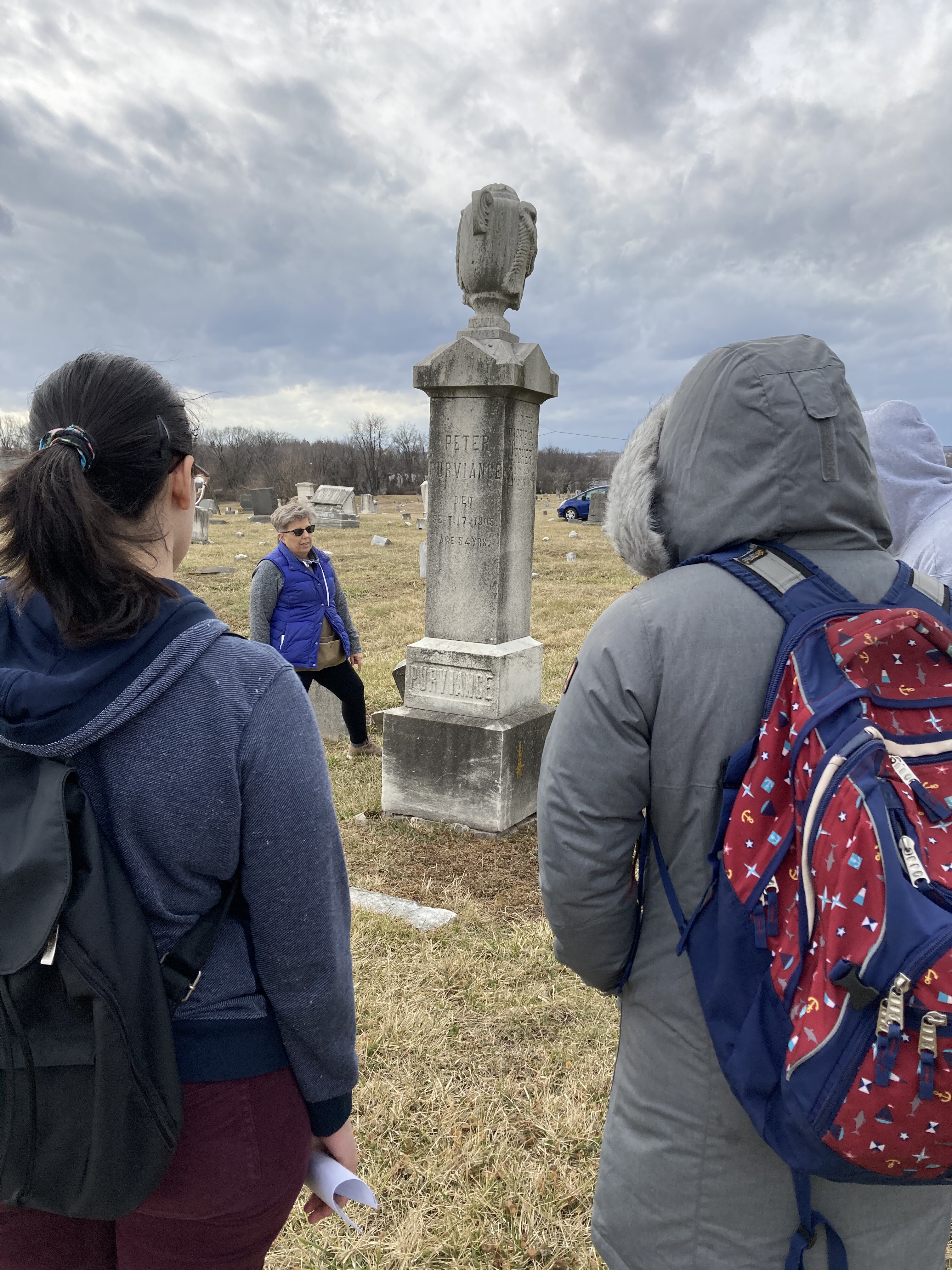

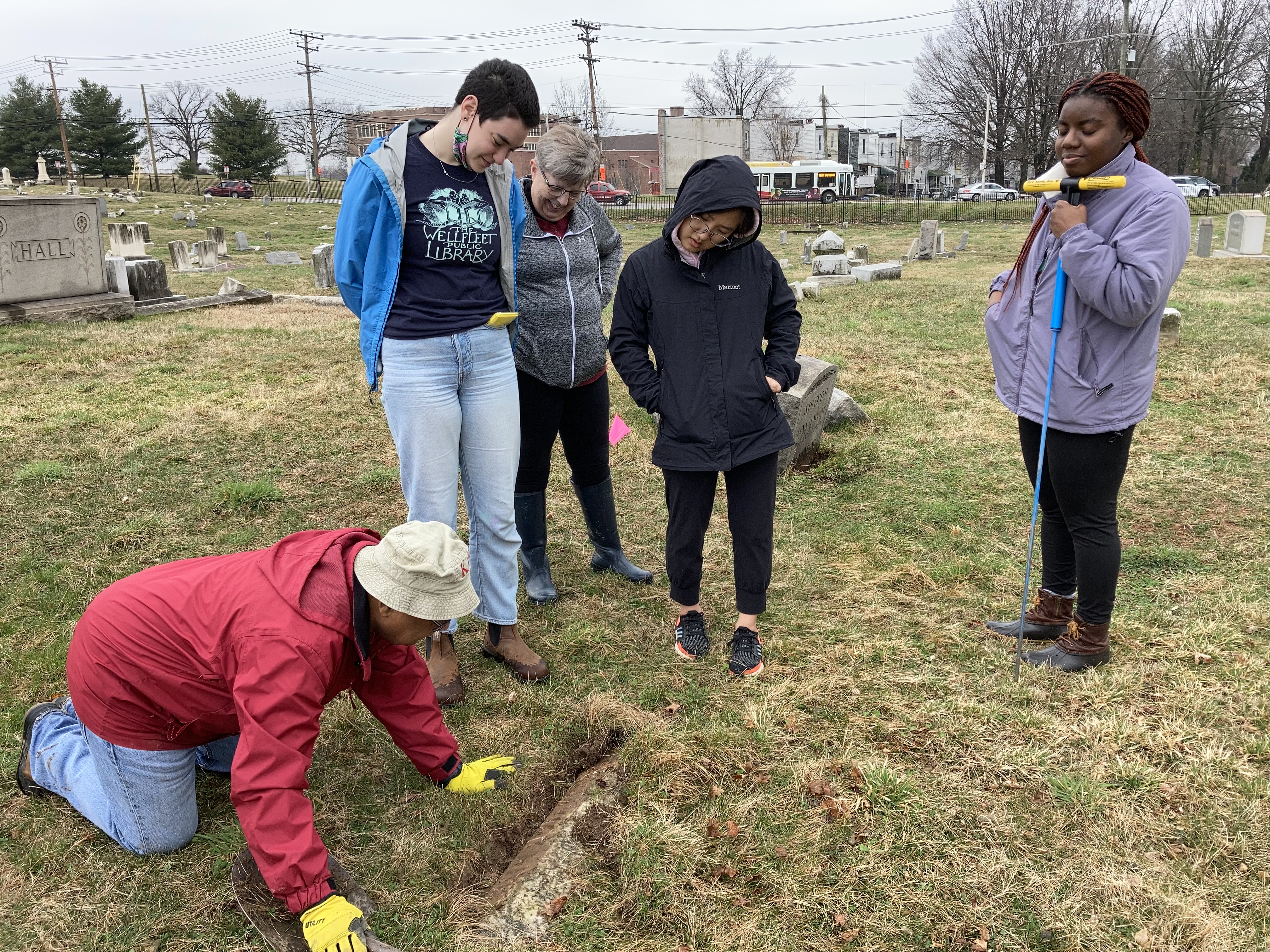
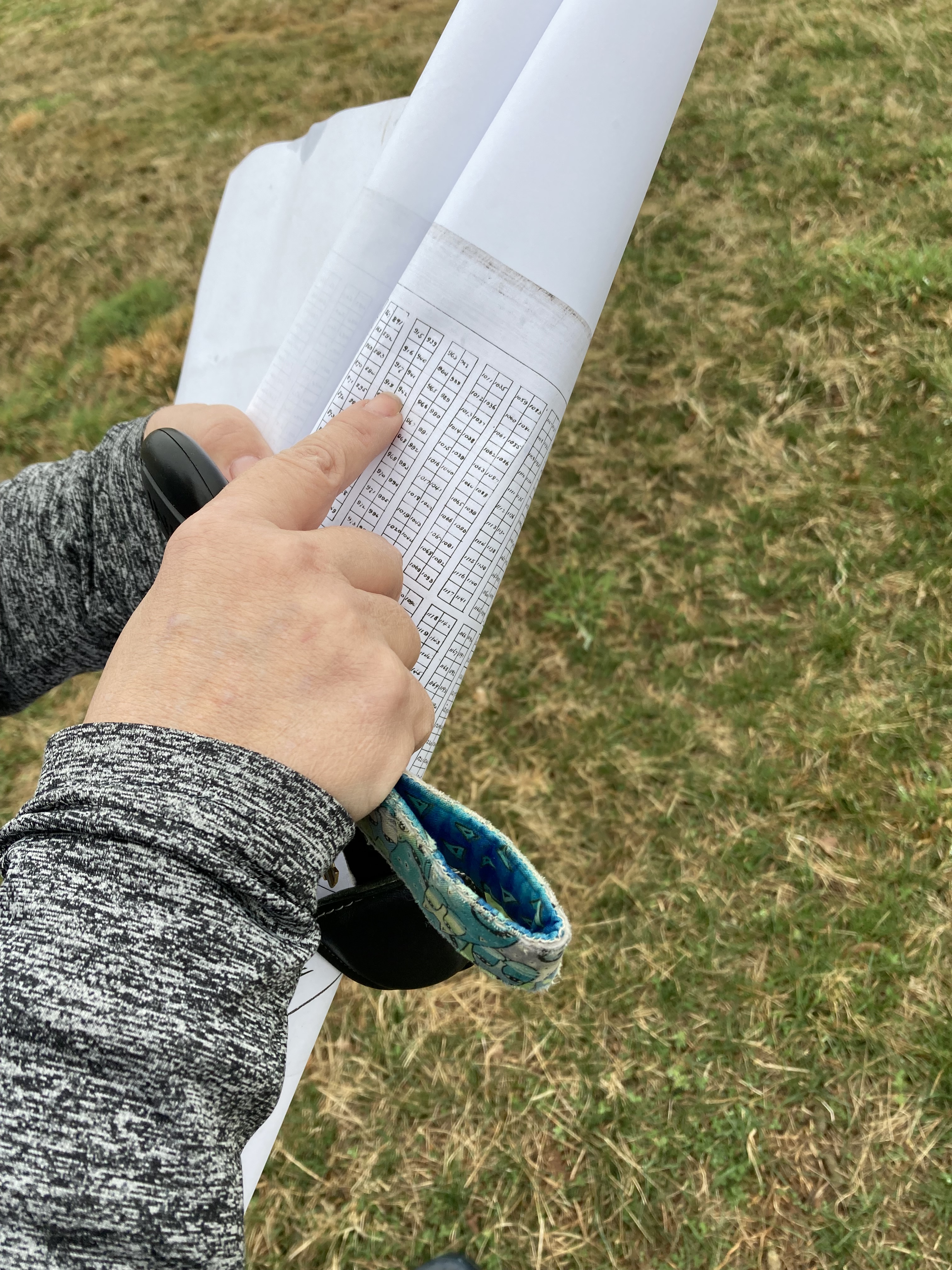
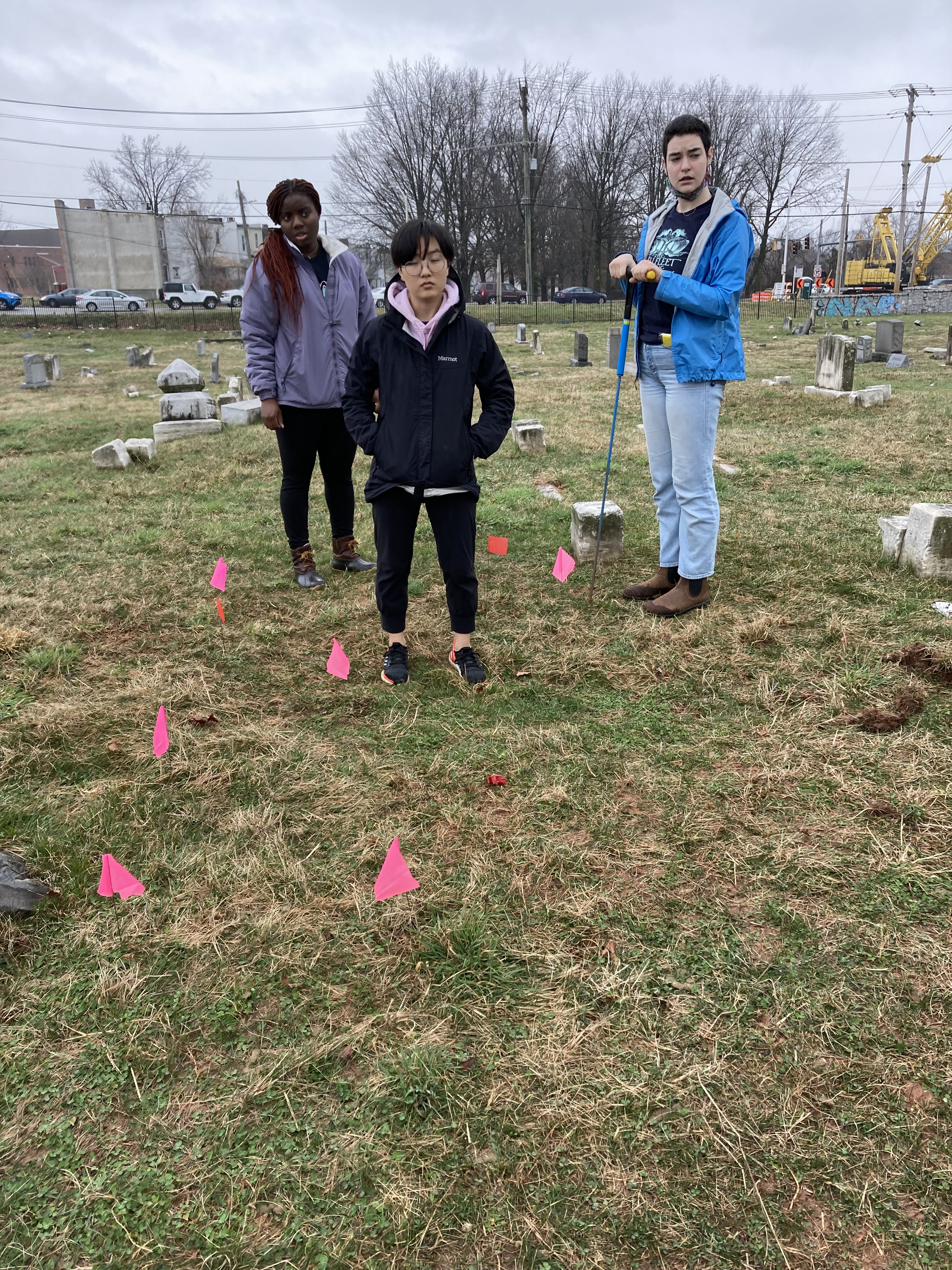
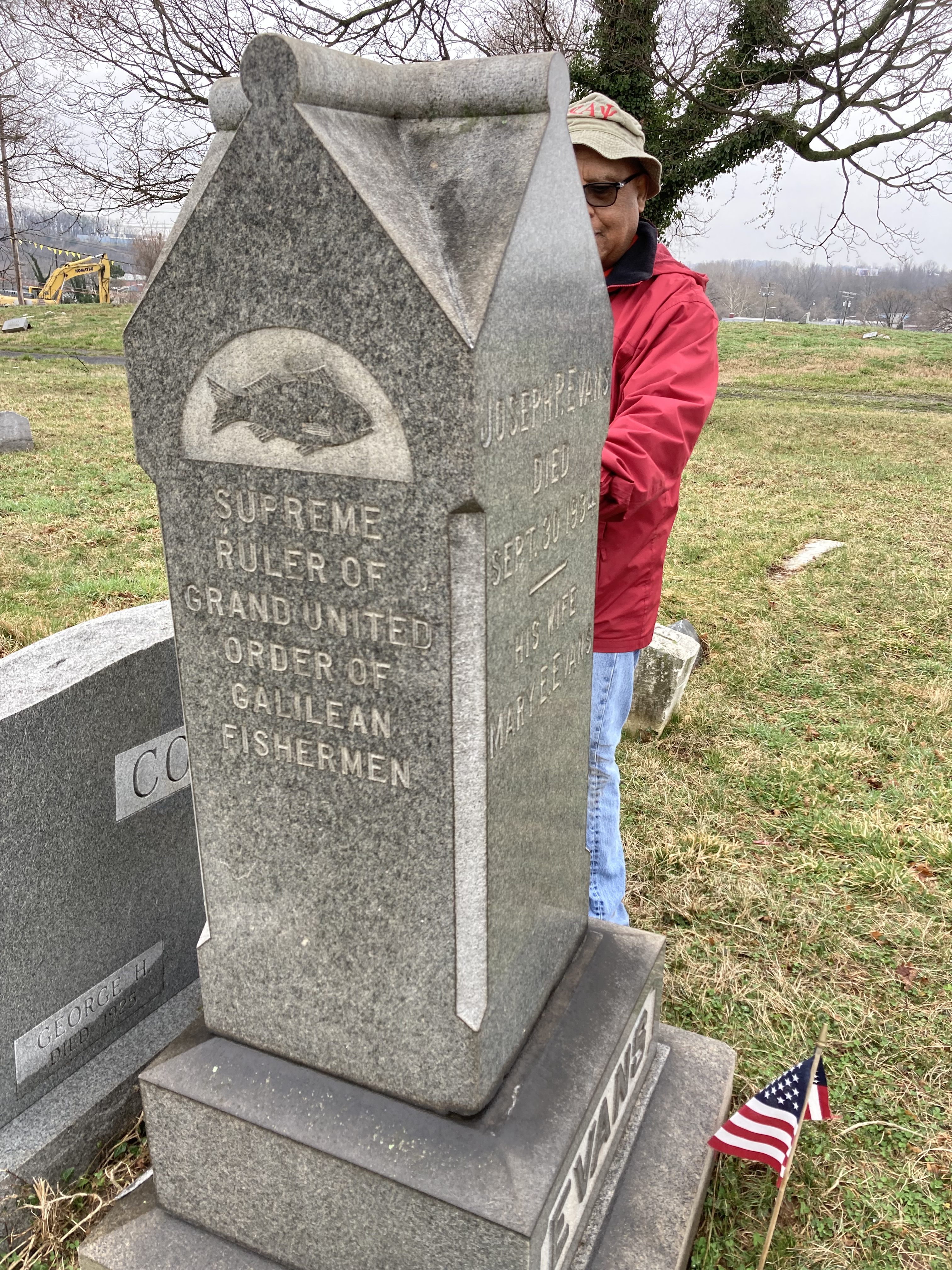
From left to right, top to bottom: Jesse Bennett, Research Coordinator for the cemetery and co-instructor of the class, gives a tour while students document via photographic and audio recording; Nancy Sheads, a volunteer researcher for the cemetery, archivist, and co-instructor of the class, discusses tombstone symbolism; students documenting gravesite data; examining a partially obscured marker for clues about the name and dates of the interred; matching grave-markers to historic plot maps; flagging an area to determine the outlines of a family plot, where the markers have been buried over time; reading a biography on a tombstone.
 mourninginbaltimore